
Memory Care in Saline, MI
When a loved one is living with Alzheimer's disease or dementia, finding a memory care community that provides the right combination of safety, specialized staff, and daily structure is one of the most consequential decisions a family can make. Saline, Michigan, located just southwest of Ann Arbor, offers a quiet, family-oriented setting where seniors with memory loss can receive dedicated care while staying close to the people and healthcare resources that matter most.
For families across Washtenaw County, memory care in Saline combines small-community comfort with proximity to one of Michigan's strongest healthcare markets.
What Is Memory Care?
Memory care is a specialized form of senior living designed for individuals living with Alzheimer's disease, dementia, and other conditions that affect memory and cognitive function. Unlike traditional assisted living, memory care communities provide a higher level of structure and security, including secured entry and exit points, 24-hour health monitoring, and staff specifically trained in evidence-based dementia care techniques.
Residents in memory care receive individualized care plans that address their needs at every stage of the disease. Daily routines are consistent and predictable, which reduces the confusion and anxiety that often accompany memory loss. Life enrichment programming is designed to stimulate cognitive function and encourage social connection, even as the disease progresses. Meals, medication management, personal care assistance, and housekeeping are all included, allowing residents to focus on quality of life rather than the logistics of daily living.
Linden Square: Memory Care in Saline, MI
Linden Square Senior Care is an MDHHS-licensed senior care community located at 650 Woodland Drive East in Saline, MI. Founded in 2013 and part of the Inspired Senior Healthcare family, Linden Square provides assisted living, enhanced living, memory care, and respite stays for seniors across Saline, Ann Arbor, Ypsilanti, and the broader Washtenaw County area.
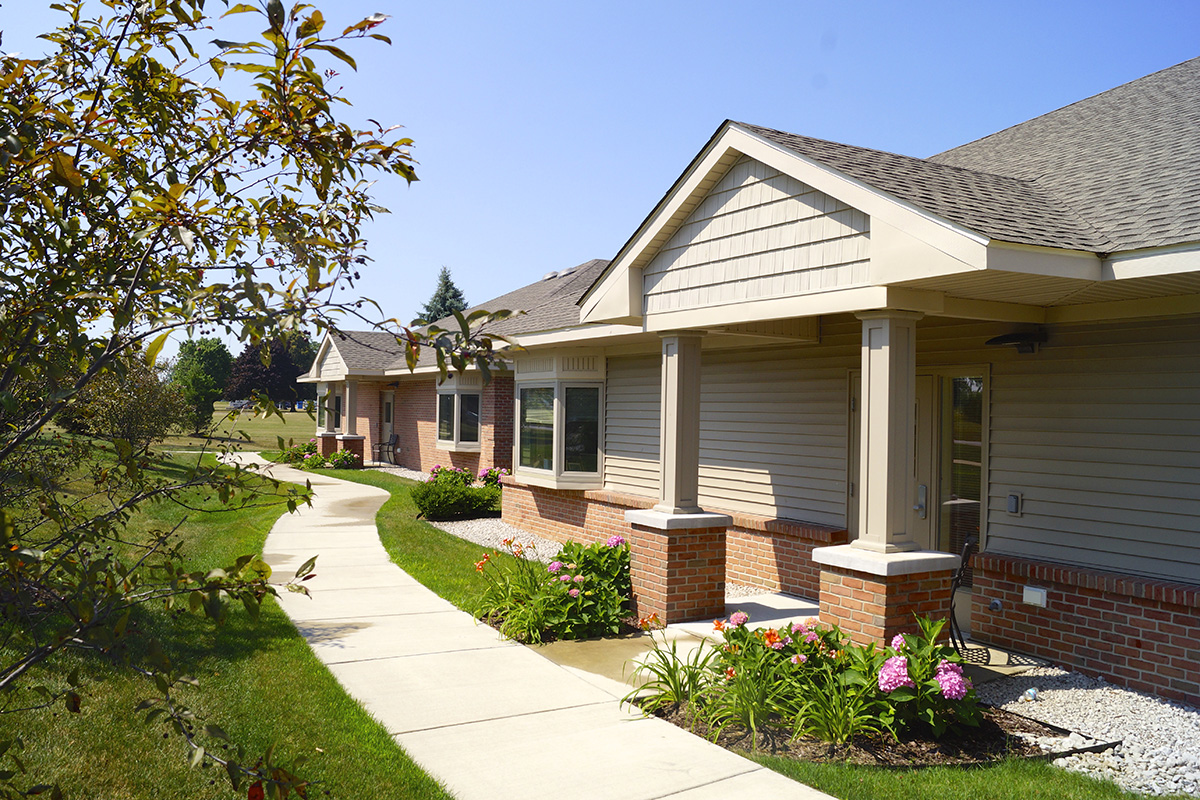
Linden Square's memory care program is housed in secured neighborhoods designed specifically for residents living with Alzheimer's disease and dementia. Both interior and exterior doors are secured, and a secured outdoor patio allows residents to enjoy fresh air and natural light safely. The single-story layout of the entire community eliminates the need for elevators and provides intuitive, easy-to-navigate living spaces that reduce disorientation and help residents move through their day with greater confidence.
Every memory care resident at Linden Square receives an individualized care plan developed through a comprehensive pre-move-in assessment and reviewed monthly as needs change. The care team works directly with each resident's family and physicians to ensure the plan reflects the resident's current abilities, medical requirements, and personal preferences. This collaborative approach means families remain actively involved in their loved one's care rather than simply receiving updates from a distance.
Memory Care Services at Linden Square
Linden Square delivers a full range of memory care services designed to support residents physically, cognitively, and emotionally throughout every stage of memory loss.
Personal care assistance covers all activities of daily living, including bathing, dressing, grooming, mobility, and toileting. Staff members are trained in dementia-specific care techniques that prioritize dignity, patience, and the preservation of independence wherever possible. The goal is not to do everything for the resident but to provide the right level of support at the right time.
Medication management is provided by on-site staff available 24 hours a day, seven days a week. Medications are administered on schedule, monitored for side effects and interactions, and coordinated with each resident's physician. For individuals with dementia, medication management is especially critical because the disease can make self-administration unreliable and potentially dangerous.
Life enrichment programming is tailored to each resident's stage of memory loss, ensuring that activities remain meaningful, accessible, and engaging. Cognitive stimulation programs, music and art activities, sensory engagement, and structured social interaction are woven into daily routines. The goal is to promote mental engagement and emotional well-being, not simply to fill time. A dedicated activities team designs the calendar around resident interests, abilities, and responses.
The physical environment is purpose-built for memory care. Secured neighborhoods with controlled entry and exit prevent wandering, while thoughtful interior design supports wayfinding and reduces confusion. Private rooms, shared common areas, and the secured outdoor patio provide a balance of personal space and community connection that is essential for residents with memory loss.
How Much Does Memory Care Cost in Saline, MI?
Memory care in the Saline and Washtenaw County area costs an average of approximately $5,235 to $6,347 per month, depending on the source, community, level of care, and room type. This is above the Michigan statewide average of approximately $5,250 per month but reflects the higher cost of living in the Ann Arbor metro area. Costs can range from roughly $3,158 per month for more modest accommodations to $8,704 per month for premium memory care suites.
Most memory care communities in the Saline area include room, meals, housekeeping, laundry, medication management, and 24-hour supervision in their monthly rates. Additional services such as in-house therapy, specialized dietary accommodations, or higher levels of personal care may be available at additional cost. Families should request a detailed pricing breakdown from each community to understand exactly what is included.
Medicare does not cover the room and board costs of memory care, as it is classified as custodial rather than skilled medical care. However, Medicare may cover certain medical services received within a memory care community, such as physician visits, therapy, and some prescription medications. Michigan's MI Choice Waiver Program may help eligible individuals offset some personal care costs through Medicaid, though room and board remain the family's responsibility. VA Aid and Attendance benefits, long-term care insurance, and bridge loans are other funding sources Michigan families commonly use. Consulting with an elder care financial advisor is strongly recommended.
When Is It Time for Memory Care?
Recognizing when a loved one needs memory care is often a gradual realization rather than a single event. Families in the Ann Arbor and Saline area commonly begin exploring memory care when they notice repeated wandering or a loved one getting lost in familiar places, difficulty managing medications safely, significant changes in personality or behavior, increasing difficulty with personal hygiene or daily tasks, and safety concerns such as leaving the stove on or forgetting to lock doors.
Many families reach a point where the level of specialized supervision required exceeds what can be provided at home, even with in-home caregivers. Caregiver burnout is a real and serious concern, and transitioning to a memory care community often improves quality of life for both the resident and their family. If you are noticing these signs in a loved one, scheduling a tour and care assessment is a good first step toward understanding whether memory care is the right fit.
Why Choose Memory Care in Saline, MI?
Saline offers families a combination of small-city calm and big-city healthcare access that is difficult to match elsewhere in Southeast Michigan. The city's walkable downtown, strong community ties, and safe residential neighborhoods create a peaceful environment for seniors with memory loss, while its proximity to Ann Arbor, just 15 minutes north, provides access to Michigan Medicine (University of Michigan Health), St. Joseph Mercy Ann Arbor, and specialists experienced in neurology, geriatrics, and dementia care.
For families across Washtenaw County, choosing memory care in Saline means shorter travel times for visits, which directly impacts resident well-being. Research consistently shows that residents who receive frequent family visits experience better outcomes in memory care, and a community in Saline ensures that visiting is convenient for families in Ann Arbor, Ypsilanti, Milan, and the surrounding area.
Linden Square Senior Care offers the additional advantage of multiple care levels within a single community. A resident who enters memory care at Linden Square is already in a community that also provides assisted living, enhanced living, and respite stays. If a spouse or partner needs assisted living while their loved one receives memory care, both can live within the same community. This flexibility is rare in the Saline and Ann Arbor market and provides meaningful peace of mind for families navigating complex care situations.
Frequently Asked Questions About Memory Care in Saline, MI
Schedule a Tour of Linden Square Senior Care
If you are exploring memory care options in Saline or the Ann Arbor area for a loved one, we invite you to visit Linden Square Senior Care. Our team will walk you through the secured memory care neighborhoods, answer your questions, and help you understand whether Linden Square is the right fit for your family. You can schedule a tour online or call us at (734) 429-7600 to speak with a care advisor.
Linden Square also offers assisted living, enhanced living, and short-term respite stays for seniors with different care needs. Families navigating complex care situations, including couples with different levels of need, can find the right fit within a single, connected community.